

Human study
Lactobacillus acidophilus
Antibiotic-associated diarrhoea
LA85 and Antibiotic-Associated Diarrhoea: A Trial in 82 Adults
A randomised, double-blind, placebo-controlled trial. Diarrhoea occurred in 4.9% of the LA85 group versus 14.6% on placebo, short of significance; but in the under-53 subgroup no one on LA85 had diarrhoea, a significant difference.
Read moreShow less
Antibiotic-associated diarrhoea
A randomised, double-blind, placebo-controlled trial. Diarrhoea occurred in 4.9% of the LA85 group versus 14.6% on placebo, short of significance; but in the under-53 subgroup no one on LA85 had diarrhoea, a significant difference.
A randomised, double-blind, placebo-controlled clinical trial in humans, registered at ClinicalTrials.gov as NCT05974657.
82 adults taking amoxicillin 750 mg twice daily for seven days were randomised to receive either LA85 at 2 × 10⁹ CFU per day or placebo, for 14 days.
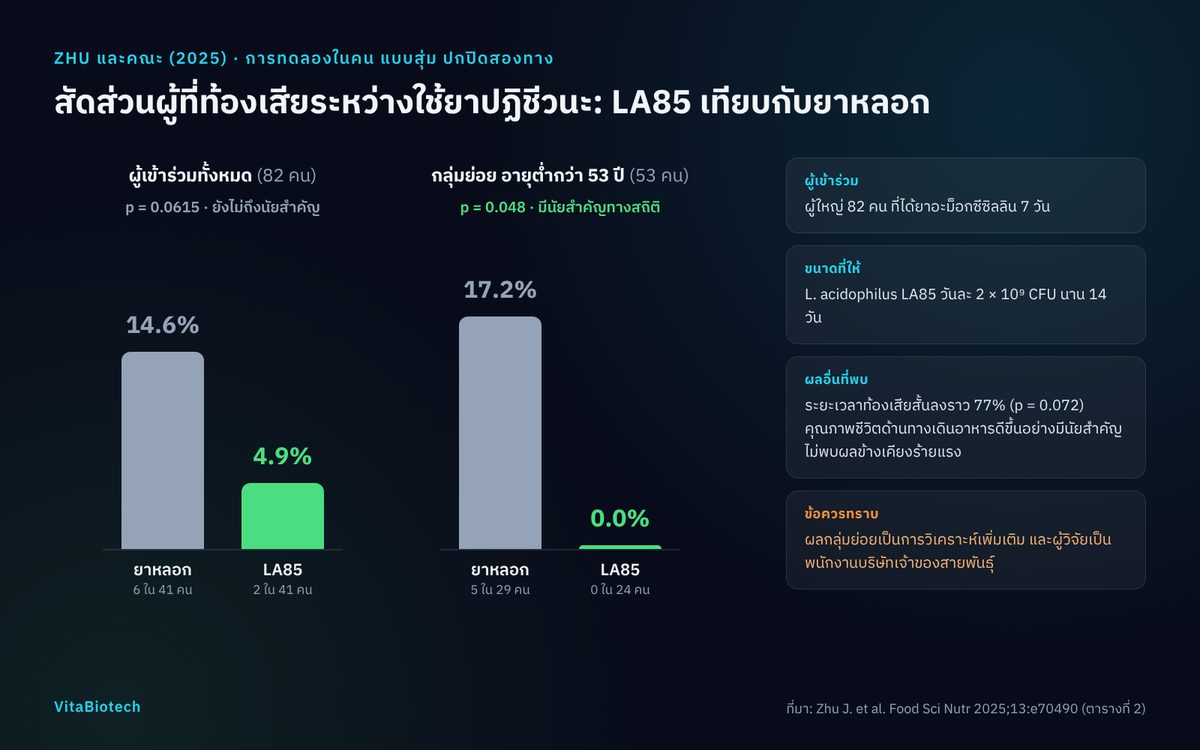
Overall, 4.9% of the LA85 group developed diarrhoea (2 of 41) versus 14.6% on placebo (6 of 41). This did not reach statistical significance (p = 0.0615).
Mean diarrhoea duration was shorter on LA85, about 2.3 hours versus 10 hours, a reduction of roughly 77%, again not reaching significance (p = 0.072).
In the subgroup aged under 53, no one in the LA85 group had diarrhoea (0%) versus 17.2% on placebo, a significant difference (p = 0.048). Among participants who completed the course as directed, diarrhoea duration was significantly shorter (p = 0.008).
Stool consistency was more stable on LA85, gastrointestinal quality-of-life scores improved significantly, and no serious adverse events were reported.
Limitations stated by the authors: a small sample, short follow-up, no gut microbiota analysis, a slight age difference between groups, and the fact that all authors are employees of the company that owns the LA85 strain.
The authors conclude that the findings support LA85 for reducing antibiotic-associated diarrhoea, but that larger studies with longer follow-up are needed to confirm this.